The 4 temperaments are 4 distinct natures of behavior. These temperaments are found in the understandings of humorism, and are one of the oldest personality type systems. It was used in ancient greek medicine, and was first described by Hippocrates a greek physician who is known to be the father of western medicine. These temperaments are a way of looking at the behaviors that different people had based off the amount of these different humors they had in their body. The four humors were blood(Air), yellow bile(Fire), black bile(Earth), and phlegm(Water), these four humors were seen to be 4 physical substances that were present in the body, and were greatly associated with the four elements.
The four temperaments are known as sanguine(Air), choleric(Fire), melancholic(Earth), and phlegmatic(Water), which one you are is determined by which humor you have the most of in your body. Usually people will have a mixture of these temperaments with two of them being the most prevalent, though one of them will be predominant, and the other will be secondary. Most people are going to have mix temperaments, but you are also able to have a pure temperament. A pure temperament is when you have a high extraordinary amount of a single temperament, so much so that you are that temperament word for word. Everybody has different levels of these humor’s in their body, which allows everyone to have a different form of behavior, and nature.
I do not believe in the 4 humor substances as physical forms except for some of their scientific counterparts, but I see them more as philosophical, and spiritual understandings of elemental balances as related to the body. I see the 4 humors as elemental balances of nature that are present on a spiritual, mental, and physical level with the 4 temperaments being manifestations of the humors on the mental level. I see this system as a more esoteric, and occult way of looking at the behavior, and nature of an entity from an elemental perspective.
Sanguine:
The temperament of sanguine is connected to the humor of blood. It is connected to the element of air, and has the 2 qualities of hot, and wet. It is a masculine temperament, and tends to be extroverted.
Sanguines are very sociable, and optimistic. They primarily enjoy having fun, and not taking life too seriously. Sanguines tend to not be able to get along with the people who are not open to there entertaining. They are prone to overindulgence, and pleasure-seeking, and because of this they do engage in thrill-seeking, and more risky behaviors. Sanguines are incredibly charismatic, and are able to form relationships very easily because of this. They seek variety, and entertainment to relieve boredom, and to make their experience interesting. They can be quite competitive with others, and actively enjoy winning. Sanguines are very open with their emotions, even though they can have difficulty with too many thoughts, and feelings coming up at once. They are very conscious about what other people think of them, and like to make good impressions, and to not be thought of as unsuccessful.
Positive traits: Lively, carefree, outgoing, charismatic, entertaining, composed, flexible, adaptable, enthusiastic, active, fun-loving, playful, activity-prone, persuasive, communicative, and social
Negative traits: Lack of deep understanding, nonserious, distractible, disorganized, and naive
Choleric:
The temperament of choleric is connected to the humor of yellow bile. It is connected to the element of fire, and has the 2 qualities of hot and dry. It is a masculine temperament, and tends to be extroverted.
People who are choleric like to be with people who are supportive, and cooperative, and because of the state dislike laziness, and disloyalty. They have many leadership qualities and enjoy leading a group and taking charge. They are extremely practical, and straightforward. They are very social, and seek to contribute to the community. They are very good at forward movement, and can easily and insightfully overcome obstacles in order to accomplish their goals. People that are choleric are good and making decisions for themselves and others. They are also visionaries who have many different dreams, goals, and ideas in which they would like to reach.
The temperament of melancholic is connected to the humor of black bile. It is connected to the element of earth, and has the 2 qualities of cold, and dry. It is a feminine temperament, and tends to be introverted.
People that are melancholic is analytical, detail oriented, and are deep thinkers and feelers. They pay attention to every detail and think over everything. They have compassion for those in need, and have high standards, and ideals. They dislike forgetfulness, tardiness, superficiality and unpredictability. They take life too seriously, and try to plan out every little thing, and enjoy trying to achieve their own subjective perfection. They dislike small talk, and enjoy deep, and meaningful conversations. They are quality oriented. They enjoy their privacy, and use their privacy as a place to think, and to plan out what they are going to do before they do it. They can have anxiety and guilt for the present and future for things that they have done, and are going to do. They spend a lot of time making decisions, and gathering a lot of information to decide what are right courses of action for them to take. They may easily get lost in thought, because of all the information that they are analyzing. They also may ask the same thing multiple times to make sure that they are correct, and what they know. They want reassurance, and feedback a lot of the times to help them make decisions more easily, and to feel justified in what they have done, or not done. They fear being seen as incompetent, and will try to avoid being seen as such.
Negative traits: Pessimistic, perfectionist, conscientious, picky, moody, and sensitive.
Phlegmatic:
The temperament of phlegmatic is connected to the humor of phlegm. It is connected to the element of water, and has the 2 qualities of cold, and wet. It is a feminine temperament, and tends to be introverted.
Phlegmatic people are good at generalizing ideas or problems to the world. They seek interpersonal harmony, and close relationships. They do not like people who are too pushy, and they also avoid conflict in all aspects of their life. They are sympathetic and care about others, yet try to hide their emotions. They are great at making compromises, and are quite logical, and intuitive. They are not very ambitious though they may have things they strive for, and because of this they may lack a sense of urgency. pragmatics are some of the easiest people to get along with, because of their very calm, relaxed, and not imposing nature, unless you ask them to change. They tend to reach for a more calm, and sustainable lifestyle of routine, and people they are close to. They enjoy going with the flow, and allow life to carry them where it needs to. They are possessive of their friendships, and material things. They usually have a couple of close friends, and are very loyal to those close friends. They also tend to be the person who never will break a friendship. They avoid conflict and resist change. Phlegmatics are also great thinkers, and are very practical, and logical.
Positive traits: Meticulous, composed, collected, calm, good team player, practical, logical, easygoing, patient, agreeable, relaxed and peaceful
Negative traits: Lack of enthusiasm, unemotional, indecisiveness, lack of energy, and procrastination
The main 4 western classic elements were first all brought together by a philosopher named Empedocles who identified earth, water, air, and fire as properties that were the building blocks of existence. This understanding eventually went on to influence Leucippus, and Democritus to construct an understanding of atomism, which identify these elements as the smallest parts of matter, and being. Later, Plato assigned these 4 elements to the platonic solids which he used in order to represent the elemental atoms in atomism, and he also gave the 5th platonic solid the element of Cosmo. When his student Aristotle brought forth his understanding of Aether this idea eventually became associated with the understanding of the cosmos of his teacher, eventually becoming the element of spirit that we know today.
It is these understandings which influence magick, and give us the understanding of the 5 classic western elements of fire, water, earth, air, and spirit as the five metaphysical building blocks of existence. Understanding these classic elements can help you build an understanding of the world through elemental means, so that you will be able to keep balance, and harmony. All of these elements have their own energies, and metaphysical associations that you will be able to bring into your working in order to empower your magick, and practice with the power of the elements.
Earth:
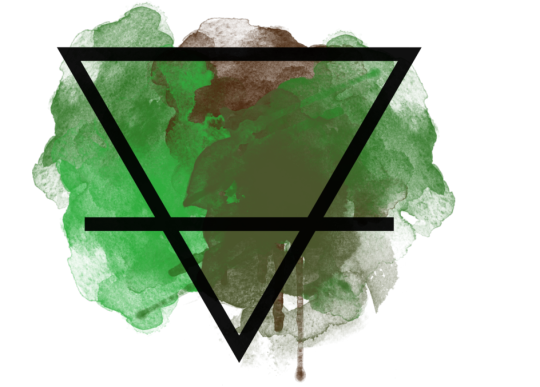
The element of earth is the first element. It’s astrological signs are Taurus, Virgo and Capricorn. The elementals of the earth are known as pygmy, or gnomes. The qualities of earth are cold, and dry, and it is also associated with a solid state of matter. It is associated to the cube platonic solid also sometimes referred to as the hexahedron, and its connected to the color green, and sometimes brown, and all of the shades of both of these colors. It is connected to the magickal tool of the pentacle, and it is connected to the direction of North. The element of Earth is feminine, and receptive, and it is connected to the season of winter. The contrary element of earth is air. The elements of earth can be connected with in low altitude areas, or places that are greatly filled with nature such as forests, or caves, and will be places where the earth element will be greatly present.
Metaphysical Correspondences Of Earth: Grounding, Centering, Balance, Harmony, Stability, Nurturing, Nature, Prosperity, Money, Wealth, Physicality, Ancestors, Structure, Abundance, Employment, Fertility, Strength, Growth, Death, Rebirth, Femininity, Yin, and much more…
Pherecydes the view that Chaos (Khaos) is Watery, deriving it
from kheisthai (to flow). The Primordial Chaos is
considered Watery because it is confused (mixed) and formless
(i.e., Cool and Moist). Similarly, according to the Pythagorean
Alkman (c. 600 BCE), in the beginning there was a “trackless
and featureless” waste of Waters. There is also an Orphic
theogony in which the first deities are Okeanos and Tethys,
corresponding to the Abyss (sweet subterranean water) and
Tiamat (bitter salt sea). Therefore Water (Chaos) precedes
Earth (Gaia), which gives matter its form.
As remarked in the discussion of Earth,
elemental Earth is Cool (connected) and Dry (form imposing).
Thus it is too rigid and inflexible to support life, but can be
given this flexibility by Water. Therefore Primal Mud, the
fertile loam of our Mother, is a combination of dry, crystalline
Earth with moistening Water. This is why Water, which gives to
inanimate Earth the ability to develop, transform and adapt, is
associated with the “vegetative soul” possessed by all living
things. It is also why many cosmogonies begin with Primal
Mud.
According to Pherecydes’ cosmogony,
the living Earth came into being when Zeus and
Khthoniê (She Beneath the Earth) married, and on the
third day of the wedding, the Unveiling
(Anakaluptêria), the craftsman Zeus wove an
elaborate, variegated Robe (pepoikilmenon Pharos),
which He gave to Khthoniê as a gift. It was adorned with
land and sea, with rivers and trees, with mountains and
meadows, with all of Earth and Okeanos, the Primal Ocean, and
with the Mansions of Okeanos. (These are the three great
divisions of the world: Earth, Encircling Ocean, and the Realms
beyond the Rim. Above the three is Heaven and below is the
Underworld; all together they are the Fivefold Cosmos.)
When Khthoniê, Queen of the Underworld, had
wrapped it around Her, She became Gaia, Mother Earth.
Likewise, the Orphic Poems say that the Earth is the Robe of
Persephone, of She Beneath the Earth. The Robe, after it had
been the cover of the sacred marriage bed, was hung upon the
Goddess’s Tree of Life. Thus the mantle of our world surrounds
Khthoniê’s Tree, the Tree of She Beneath the Earth.
As was explained in the Introduction,
Earth is overcome by Water, and so the result of combining
the two is more Watery than Earthy. That is, the Primal Mud is
more like chaotic elemental Water: formless (because Moist)
and confused (because Cool, and therefore mixing).
Nevertheless, the Primal Mud is both Dry and Wet,
corresponding to the elements Earth and Water, and so this
“Prime Matter,” which is the basis of the Great Art, is called the
“Dry Water” by the alchemists.
From this perspective, Water and Earth constitute the “gross
body”; Air and Fire provide the astral and radiant bodies,
respectively. In Empedocles’ terms, Earth and Water are the
body (sôma), Air is the soul
(psychê), and Fire is source of power
(kinêtikê). Alchemically, the body is the
Salt, which is joined by the Quicksilver (etheric body: Air) to the
Sulfur (radiant body: Fire). So also the Stoics say that the (Cool,
synthetic) “feminine” elements Earth and Water constitute
Hulê (Matter or Resource), whereas the (Warm,
analytic) “masculine” elements Air and Fire constitute
Logos (Word or Thought).
Earth and Water are the only tangible (touchable) elements;
Fire and Air are intangible. Since Water and Earth are both
Cool, their tendency is toward greater mixture; this is the
entropy of gross matter. They tend to the cold and dark
through the dissolution of form (because the mixture is
Watery).
The “igneous spirit” (the Heat residing in both Fire and Air)
gives motion to inert matter and makes it active. These
Elements tend to warmth and light through the generation of
energy. Thus Menstruum, the Living Mud, which
combines the Cool feminine elements Earth and Water
(represented by pubic triangles), is animated by
Semen, which combines the Warm masculine
elements Air and Fire (represented by the phallic triangles).
Therefore Warmth and Moisture are the two principles of
generation, which animate the sterile Earth and bring it to life.
In conclusion, Water is the spiritual principle of flexible
union, which permits both dissolution and transformation.
Water provides the Primordial Chaos, which combines with
Earth to yield the Primal Mud from which life is born. Water is
associated with Persephone, the agent of rebirth in the
Underworld, who brings the tears of mourning but also the
Ambrosia of immortality.
Why is this mediation necessary? In “Water,”
I said that Water + Earth constitutes the Primal
Mud, the “gross body,” which is potentially alive,
but not animate. On the other hand, Fire is the
principle of action, the efficient cause of all
motion, but it cannot act directly on Primal Mud
(for they are opposed, Primal Mud being
predominantly Watery). However, Air can mediate
between Fire and Primal Mud, because it has Warmth
(active differentiation) in common with Fire, and
Moisture (flexibility) in common with Water. Thus
Air is the active Spirit, which operates on the
passive structure of Earth and the flexibility of
Water. We may say that Air conveys the Fiery Power
and facilitates its embodiment. In general, as
mediator, Air transmits powers and influences, and
therefore Air is the vehicle of coordination and
communication
(see below, “Air, the
Governor”).
Thus the Stoics attributed to Heraclitus
(6th-5th cent. BCE) the idea that the soul is an
Exhalation or Warm Vaporization
(Anathumiasis) from bodily moisture; as we
might say, the Fiery Soul evokes the Breath Spirit
from the body’s Primal Mud to be the means by which
the two can unite.
So also, as mentioned in “Water,”
Prometheus molded human bodies from Earth and
Water, and gave Heavenly Fire to them. But they
were not complete before Athena breathed Air into
them.
Water,
for Water gives the power of growth and
development to lifeless matter (Earth), and I will
discuss the Mind with Fire;
here our concern is the Spirited Soul and its
vehicle, the aerial or spirit
body.
The Aerial Spirit’s role as a subtle, invisible
governing faculty was recognized in ancient times.
For example, Diogenes of Apollonia says, “It seems
to me that that which has intelligence is what
people call Air (Aêr), and that all
people are steered (kubernasthai) by this,
and that it has power over all things. For the
very thing seems to be a God and to reach
everywhere and to dispose all things and to be in
everything.” (It is significant that the word he
uses for “steered,” kubernasthai, is
related to kubernêtikos, meaning
“skilled in steering or guiding,” which is the
origin of our term cybernetics, referring
to the principles of intelligence and governance in
animals and machines. Air is the Cybernetic
Element.) Diogenes’ statement also suggests that
Air plays a role in the World Soul
(Psukhê tou Pantos) as well as in
individual souls, and that is our next topic.
In classical thought, the four elements Water, Air, Earth, and Fire frequently occur; sometimes including a fifth element or quintessence (after “quint” meaning “fifth”) called Aether in ancient Greece and India. The concept of the five elements formed a basis of analysis in both Hinduism and Buddhism. In Hinduism, particularly in an esoteric context, the four states-of-matter describe matter, and a fifth element describes that which was beyond the material world. Similar lists existed in ancient China and Japan. In Buddhism the four great elements, to which two others are sometimes added, are not viewed as substances, but as categories of sensory experience.
I have already mentioned
that Anaximenes considers Air to be the First
Principle (Arkhê) of the cosmos; it
is infinite, eternal, ever-moving and divine; he
calls Air the Father of the Gods (which recalls
Zeus’s common title: Father of Gods and Humans).
Anaximenes also says, “Just as our Breath-Soul
(Psukhê), being Air
(Aêr), governs us, so Spirit-Breath
(Pneuma) and Air (Aêr)
encompass the whole cosmos.” This suggests that
the governance of the cosmos is accomplished by the
Spirit-Breath of the World Soul. Indeed, Philemon
says that Air, who is called Zeus, knows everything
done by Gods or mortals, because He is everywhere
at once. So also Empedocles points to the God’s
subtle nature: "He is a Spirit-Mind
(Phrên), holy and ineffable, and
only Spirit-Mind, which darts through the whole
cosmos with its swift thoughts.“ (Note that the
term translated Spirit-Mind, Phrên,
is the singular of Phrenes, Breast.) Here
again we see Air as a medium of communication and
governance, but on the cosmic scale.
However, just as we all breathe the same Air,
and the Air in my breast is continuous with that in
yours, so also the World Soul is continuous with
individual souls (an idea we also find in the
Upanishads, where Brahman, the World Soul
identified with Prâna (Breath), is
identical to Âtman, the individual
Life-breath). As the nervous system integrates the
activities of individual organs to work for the
sake of the organism, so the Air binds our
individual souls into one World Soul. Microcosm
and macrocosm unite.
Philo of Biblos (64-140 CE) translated a
“Phoenician History,” which was supposed to have
been written by Sanchuniathon before the Trojan War
(which is not unlikely) and to be based on Egyptian
scriptures attributed to Thoth. According to this
myth, in the beginning there was a Primal Wind, a
breath of mist and darkness (i.e.
Aêr); also there was
Môt, the muddy chaos of Erebus
(khaos tholeron Erebôdes), that is,
the formless Primal Mud. The Primal Wind
fertilized itself and became Desire
(Pothos, perhaps corresponding to Semitic
Rûah, which means Breath but also
connotes Desire). Further, Môt became the
Cosmic Egg, and the cosmos was born when Desire
opened the Cosmic Egg (as also in the Orphic
cosmogonies), which led to a separation of the
Elements.
According to Eudemus (4th cent. BCE), the
Phoenicians who lived in Sidon also believed that
the universe was born of Air. In the beginning was
Time (Khronos), Desire (Pothos)
and Fog (Omikhlê). Desire and Fog
united, giving birth to Aêr and
Aura (Moving Air).
Earth represents strength, grounding, prosperity, the material, wealth, success, foundations, death and rebirth. Focus on this element if the goal of your spell is about fertility, prosperity, business or stability. Earth spells may take longer to work, but they’re also more firm and are good if you’re looking for long-term solutions.
GENDER: Feminine SEASON: Winter DIRECTION: North HOUR: Night
STAR SIGNS: Taurus, Virgo, Capricorn STONES/GEMS: Jade, Onyx, Emerald, Salt RITUAL TOOLS: Stones, Dirt, Bones, Pentacle, Salt, Crystals RITUAL FORMS: Burying, Planting, Imprinting to soil or sand TAROT SUIT: Pentacles
A I R
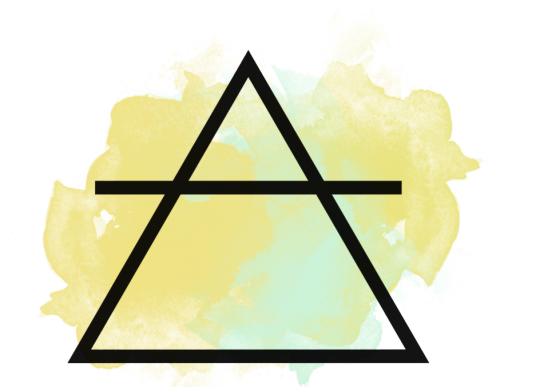
Air represents intellect and the mind, wisdom, knowledge; logic as well as abstract thought, intuition and higher consciousness. If you’re seeking freedom, travels, or to enhance your memory and focus – focus on Air spells! Air is whimsical and amiable, personally I haven’t found it useful for more serious spells, but it does wonders for my studies.
GENDER: Masculine SEASON: Spring DIRECTION: East HOUR: Dawn
STAR SIGNS: Gemini, Libra, Aquarius STONES/GEMS: Amethyst, Opal, Alexandrite, Beryl RITUAL TOOLS: Incense, Wand RITUAL FORMS: Fanning, Tossing into air, Suspending in a high place TAROT SUIT: Swords
F I R E
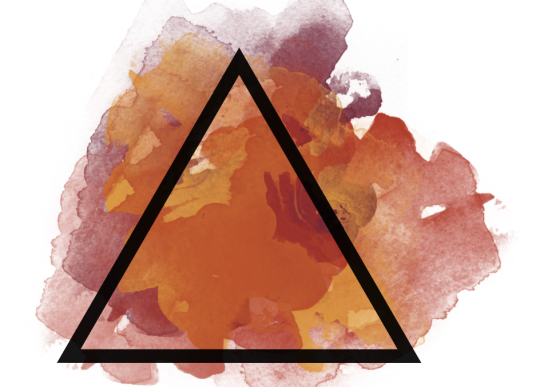
Fire represents energy, passion, purification, love, inspiration, desire, will, courage, power, leadership, sexuality. In spellcraft, focusing on Fire is good for purification, healing and love spells; it’s the best element for quick, strong spells. Although, Fire is fierce in essence, and Fire spells are susceptible – they should be well thought out.
GENDER: Masculine SEASON: Summer DIRECTION: South HOUR: Noon
Water represents purification as well; though it’s focused more on the soul and the subconscious rather than the physical, material world. Water stands for emotion, intuition, wisdom, eternal movement, reflection, lunar energy. Focusing on the Water element is good for psychic abilities, getting in tune with your inner self, mysteries, friendships, love, dreams and sleep.
GENDER: Feminine SEASON: Autumn DIRECTION: West HOUR: Dusk



 Occult Aspects